

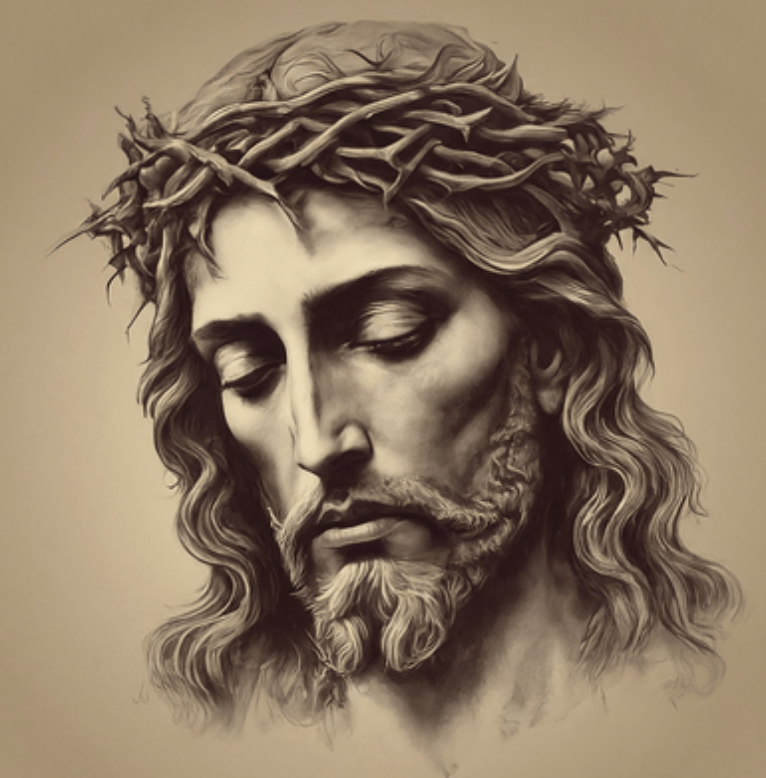
“And without controversy great is the mystery of godliness: God was manifest in the flesh, justified in the Spirit, seen of angels, preached unto the Gentiles, believed on in the world, received up into glory.”
— 1 Timothy 3 : 16
The Mystery of Godliness: One God Manifest in Christ
The Bible’s central confession that “the LORD is one” shapes every later discussion about Jesus of Nazareth. This article argues that Jesus is not a second divine person but the visible embodiment of the one God. By following key texts that cover promise, incarnation, and Spirit indwelling, we see how Father, Son, and Spirit are three ways the one God reveals himself rather than three separate persons. A brief look at common Trinitarian proof-texts and early Christian testimony completes the argument.
When Promise Becomes Flesh
Hebrew prophecy treats God’s word as an active power: what he speaks, he accomplishes (Isa 55:11). Early Christians read the birth of Jesus as the moment that spoken promise entered history (Matt 1:23).
Thesis: the God who promised Israel’s salvation is the same God who appeared in flesh. Jesus is not a junior member of a divine committee; he is the one Lord, now visible and tangible. To show this, we will examine
- Scripture’s unbroken monotheism
- Christ as God’s Word in flesh
- The Spirit as God’s life within believers
- How disputed texts actually support this unity.
One God, One Subject
The Shema declares, “Hear, O Israel: the LORD our God, the LORD is one” (Deut 6:4). Singular pronouns and exclusive claims fill the Hebrew Bible: “Beside me there is no savior” (Isa 43:11). The narrative never hints at multiple divine minds. Any concept of God that introduces more than one centre of consciousness must reckon with this constant singular grammar.
Christ: God’s Word in Flesh
- Colossians 2:9
“In him dwells all the fullness of deity bodily.” The Greek term plērōma refers to the complete fullness of God’s nature, not a fragment. Nothing divine remains outside Christ.
- Matthew 1:23
“Emmanuel” means “God with us.” Matthew presents God himself among his people, not merely someone sent by God.
- John 1:1-14
John says the Word was “with God” and “was God.” A Oneness reading understands “with” as God’s self-directed reason poised for manifestation, not fellowship between two divine selves. The Word “became flesh,” revealing the same subject who spoke creation into being.
Early-church echo
- Ignatius of Antioch: Jesus is “our God” who appeared “in human form” (Eph 7:2).
- Irenaeus: “He who saves us is God himself” (Against Heresies 3.19.2).
Answering Disputed Texts
| Text | Trinitarian claim | Unitary reading |
|---|---|---|
| John 17:1-5 | Jesus’ prayer shows two divine persons. | The incarnate Son prays from genuine humanity to the transcendent divine identity. The prayer is mediatorial, not dialogue between co-equal minds. |
| Matthew 28:19 | Baptismal formula names three distinct persons. | “Name” is singular; Father, Son, Spirit are three modes of one God whose single name is invoked over believers. |
| John 1:18 (monogenēs) | “Only-begotten Son” implies separate offspring. | Monogenēs stresses uniqueness, not ontological derivation; the Son uniquely makes the unseen God known. |
These readings preserve the unity demanded by the Shema while explaining language of sending and praying.
The Spirit: God Within Us
In the Old Testament, the Spirit (rûaḥ) is portrayed as God’s active presence in creation and prophetic revelation (Genesis 1:2; Nehemiah 9:20). In the New Testament, Jesus speaks of the coming “Spirit of truth,” declaring, “He dwells with you and will be in you” (John 14:17), and further promises, “He will show you things to come” (John 16:13), thereby affirming the Spirit’s ongoing revelatory function. The shift is spatial, not personal; the same God who walked beside them now lives within them. At Pentecost, Peter explains that the outpoured Spirit is the presence of the risen Jesus Himself (Acts 2:33), affirming that the Spirit believers receive is not a separate divine person, but the very life and power of Christ.
Unified Action from Promise to Presence
| Redemptive stage | Scriptural voice | Fulfilment in Christ and the Spirit |
|---|---|---|
| Plan announced | “I declare the end from the beginning” (Isa 46:9-10) | Jesus foretells events so that disciples “may believe” (John 13:19). |
| Salvation enacted | “His holy arm has gained him victory” (Ps 98:1) | The cross lifts that arm for deliverance. (John 12:32; Isaiah 53:1) |
| Life imparted | God will pour out his Spirit on all flesh. (Joel 2:28) | Acts 2 records the promise realised; the same Lord now dwells within his people. |
One speaker, one purpose, three modes of disclosure.
From Shadow to Substance
“Father” names the transcendent source, “Son” the embodied revelation, “Spirit” the indwelling presence. Scripture never divides these into separate beings. It presents a single narrative: the God who promised, appeared, and now abides. Titus 2:13 therefore calls Jesus “our great God and Savior.” In him the fullness of deity is not symbolic but tangible. The biblical story is coherent only when the promise-maker and the promise-keeper are the same Lord.
References
- Richard Bauckham, God Crucified, p. 45.
- On dāḇār as performative speech, see Brevard Childs, Isaiah, p. 437.
- For the Shema as ontological confession, see Daniel Block, Theological Introduction to the Old Testament, pp. 135-138.
- BDAG, s.v. “πλήρωμα,” notes “totality of divine powers.”
