

The Call of a Prophet: Moses and Elijah’s Encounters with God
Moses had a remarkable encounter with God at the burning bush (Exodus 3:2-6), where he learned about his calling to free Israel from bondage. Elijah also experienced God’s presence in a more subtle way, through a quiet whisper on Mount Horeb (1 Kings 19:12-13). These moments show how intimately connected they were to God. Both Moses and Elijah were more than just prophets; they were chosen to lead and guide Israel back to God.
Mountains of Revelation: Sinai and Horeb
Moses ascended Mount Sinai to receive the Ten Commandments (Exodus 19-20), a moment that forever shaped Israel’s relationship with God. Elijah’s journey to Mount Horeb (another name for Sinai) centuries later also led to a profound encounter, where God recommissioned him for the prophetic work ahead (1 Kings 19:8-18). What is it about mountains that makes them such powerful places for divine encounters? In both cases, it’s evident that human frailty is met with God’s overwhelming presence.
Confronting Idolatry: The Golden Calf and Baal Worship
Idolatry was a constant issue for Israel. Moses confronted it directly when he came down from Mount Sinai and found the Israelites worshiping a golden calf (Exodus 32:1-35). Elijah faced the same struggle during the reign of King Ahab with Baal worship. The epic showdown on Mount Carmel, where God sent fire from heaven, proving Himself to be the true God (1 Kings 18:17-40), reveals how both prophets defended God’s holiness in the face of Israel’s rebellion.
Miracles and Signs of Power
The miracles of Moses and Elijah show God’s power in amazing ways. Moses brought plagues to Egypt, parted the Red Sea, and provided manna in the wilderness (Exodus 7-16). Elijah called down a drought, miraculously multiplied food for a widow, and even brought her son back to life (1 Kings 17). These miracles didn’t just demonstrate power; they also confirmed the prophets’ missions and reminded everyone that God is both a provider and a judge.
Exodus and the Journey into the Wilderness
Moses led the Israelites through the wilderness toward the Promised Land, while Elijah had his own wilderness experience when he fled from Queen Jezebel. Just as the Israelites were sustained by manna, Elijah was miraculously fed by an angel (1 Kings 19:5-8). In both these stories, the wilderness becomes a place of testing and dependence on God.
The Passing of the Mantle: Successors and Continuity
Both Moses and Elijah ensured that their calling would continue beyond their lifetimes. Moses appointed Joshua to lead Israel into the Promised Land (Deuteronomy 31:7-8), while Elijah passed his prophetic mantle to Elisha (2 Kings 2:9-15).
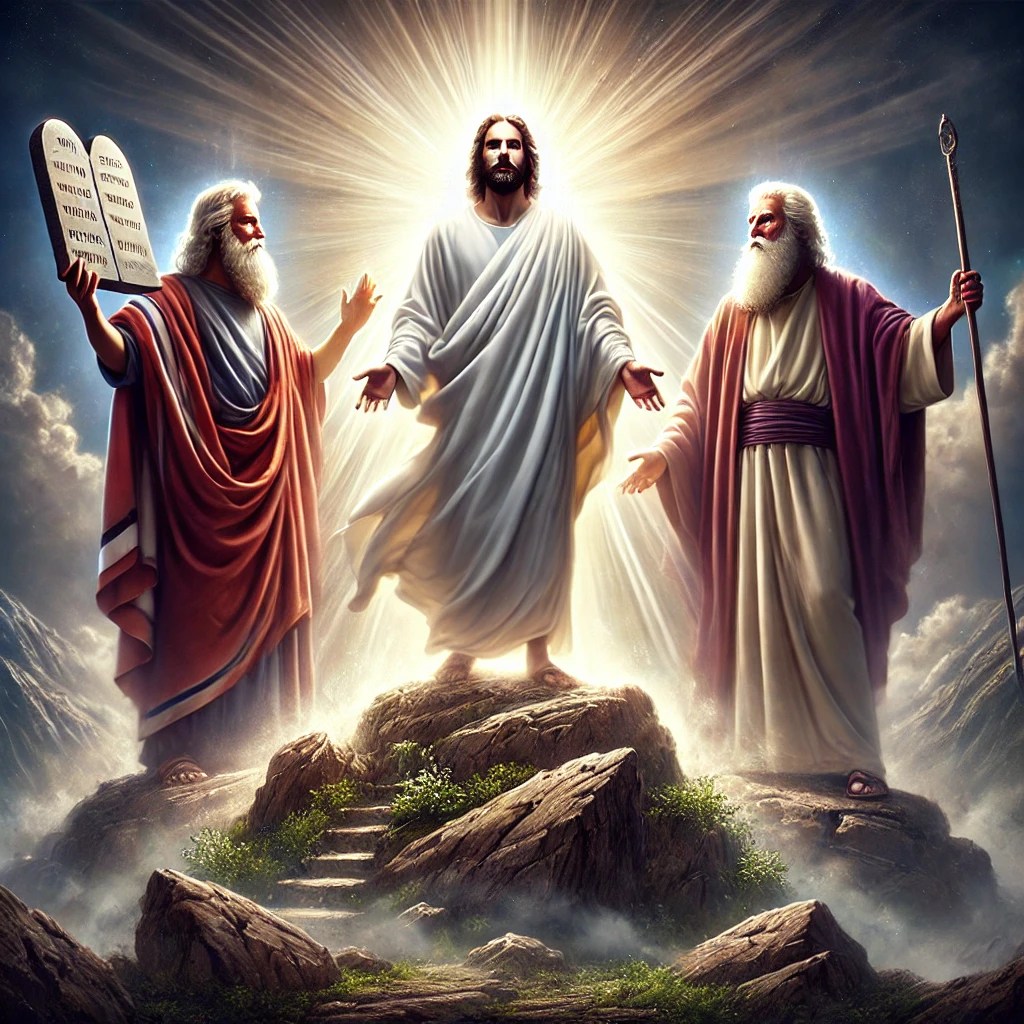
The Mount of Transfiguration: Moses, Elijah, and Jesus
The coming together of Moses, Elijah, and God’s redemptive plan takes place on the Mount of Transfiguration. As described in Matthew 17:1-8, Moses and Elijah appear alongside Jesus, revealing the unity of the Law and the Prophets in Him. It’s a seamless connection between the Old Covenant and the New, as God’s voice says:
“This is my beloved Son… hear ye him.” (Matthew 17:5)
This statement reveals that Christ is the eternal voice of God manifested, to be listened to above all. The presence of Moses and Elijah alongside Jesus shows how God’s work flows through history, with all of Scripture pointing towards Christ as the ultimate fulfillment of God’s eternal plan to bring His people back to Him.
Elijah’s Role as the Second Moses
The lives of Moses and Elijah are deeply intertwined with God’s unfolding plan. Both prophets stood as pillars of faith, leading God’s people, confronting idolatry, and performing miracles that displayed God’s power. Ultimately, their stories point us to Jesus, the fulfillment of the Law and the Prophets.
Elijah’s role as a ‘second Moses’ not only restored Israel’s covenant faithfulness but also foreshadowed Christ, in whom the promises of God and the New Covenant of grace are fulfilled. At the Transfiguration (Matthew 17), both Moses and Elijah appeared, representing the Law and the Prophets, pointing to Christ as the one who fulfills them.
Hosea (14:1-2) echoes this realization of grace, as the plea to “receive us graciously” symbolizes the restoration Christ brings under the New Covenant, offering healing and renewal. This reconciliation is also reflected in Ezekiel (36:26-27), where God promises to cleanse and renew His people with a new heart and spirit. As we reflect on their journeys, we are reminded of God’s faithfulness to His Word.
 Spread the Spirit
Share your thoughts!