

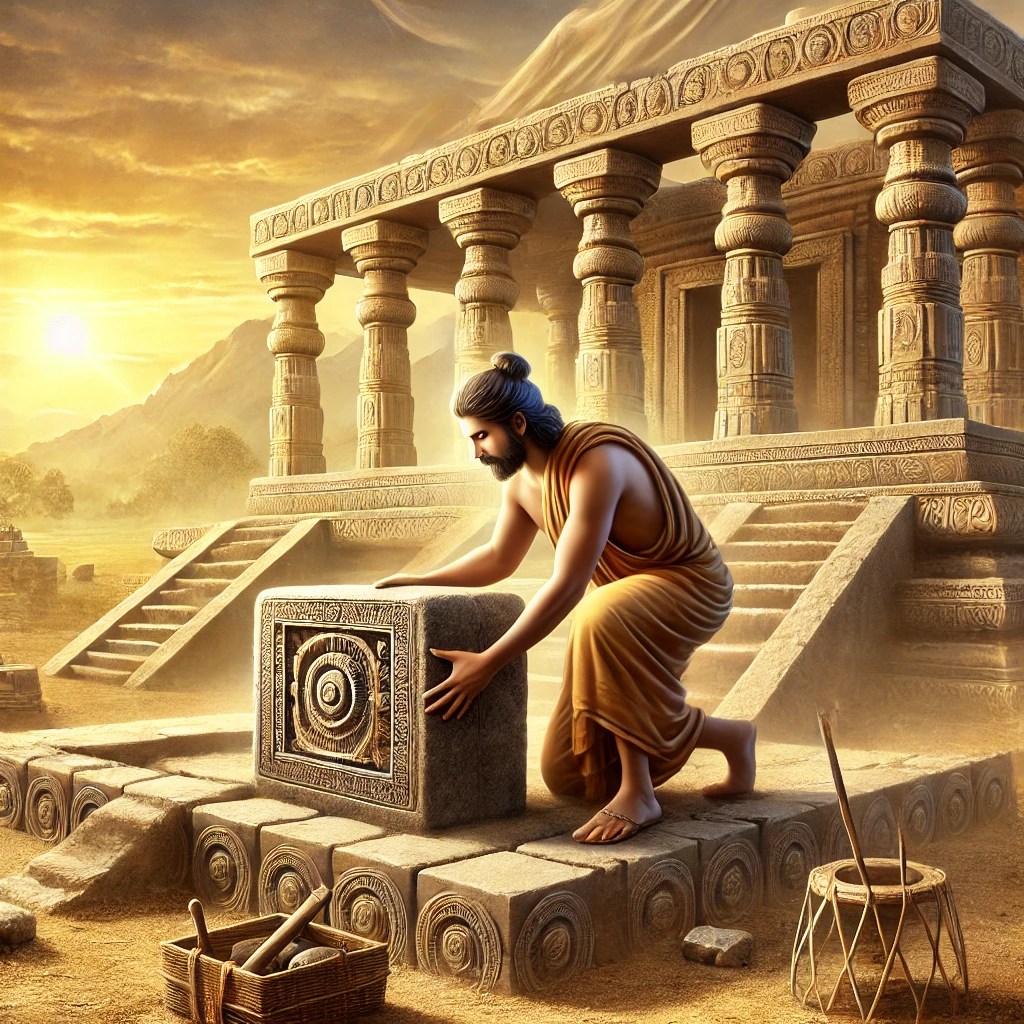
The Foundation of Creation
The portrayal of God as the architect of creation reveals His care, purpose, and power. In Job 38:5-6, God challenges,
“Who marked off its dimensions? Surely you know! Who stretched a measuring line across it? On what were its footings set, or who laid its cornerstone?”
These questions highlight the deliberate design behind creation, emphasizing the cornerstone, a symbol of stability and purpose. The world was not formed by chance, but through divine craftsmanship, each part measured and secured by the Creator’s hand.
In Isaiah 48:13, God declares,
“My own hand laid the foundations of the earth, and my right hand spread out the heavens.”
This further affirms the vastness of creation, showing both the strength of its foundation and the wisdom of its Maker. The cornerstone imagery reveals this truth, representing the structure that holds creation together.
The theme of foundations runs deeply through Scripture, often tied to God’s promises and His presence. In the Old Testament, the construction of Solomon’s temple symbolized not just an architectural wonder but God’s dwelling among His people. In the New Testament, this theme reaches its fullness as Christ is revealed as the cornerstone (Ephesians 2:20), the foundation upon which the church is built.
Foundations symbolize more than stability; they reflect God’s intentional design and eternal purpose. From the formation of the earth to the establishment of His spiritual temple, the cornerstone points back to God as the source and sustainer of all things. The same God who laid the earth’s foundations also provides a firm foundation for our faith, one that is strong, enduring, and unshakable.
The Physical Foundation: A Work of Devotion
The construction of the temple’s foundation in the Old Testament was not merely an architectural achievement but a sacred act of obedience and devotion to God.
“At the king’s command, they removed from the quarry large blocks of high-grade stone to provide a foundation of dressed stone for the temple.”– 1 Kings 5:17
These stones, laboriously prepared, symbolize the unseen yet vital work required to ensure the temple’s stability. This foundation is a powerful fusion of human effort and divine will, where meticulous craftsmanship meets unwavering faith. It is through this partnership of precision and devotion that a sacred space is created, a dwelling place for God among His people.
In the post-exilic period, the laying of the temple’s foundation became a profound act of renewal. Ezra 3:10-11 captures the emotional weight of this moment:
“When the builders laid the foundation of the temple of the Lord… all the people gave a great shout of praise to the Lord… But many of the older priests and Levites, who had seen the former temple, wept aloud.”
This foundation held a dual significance: it was both a symbol of restoration and a reminder of loss. For some, it represented the fulfillment of God’s promises and the return of His presence among them, stirring deep joy and hope. Yet, for others who had witnessed the grandeur of the former temple, it stirred grief over what had been lost. This emotional tension captures the complexity of the human experience in worship, where joy and sorrow frequently coexist as we journey through God’s work in our lives.
A Prophetic Revelation: A Stone of Promise
The prophets further revealed the symbolism of the temple’s foundation, prophesying its deeper significance in God’s redemptive plan.
“See, I lay a stone in Zion, a tested stone, a precious cornerstone for a sure foundation; the one who relies on it will never be stricken with panic.” – Isaiah 28:16
This passage foreshadows the coming of Christ, the ultimate foundation upon which the eternal temple would be built. The prophetic depiction of the cornerstone highlights God’s faithfulness and His commitment to fulfilling His promises.The foundation becomes a profound symbol of divine reliability, a reminder that what God begins, He will bring to fruition, both in history and in the redemptive work accomplished through Christ.
Christ: The Cornerstone of a New Temple
In the New Testament, the physical foundation of the temple gives way to a deeper reality—Christ as the cornerstone of a spiritual temple.
“You are no longer foreigners and strangers, but fellow citizens with God’s people… built on the foundation of the apostles and prophets, with Christ Jesus himself as the chief cornerstone.” – Ephesians 2:19-20
This spiritual temple, composed of “living stones” (1 Peter 2:5), signifies the Church as the dwelling place of God’s presence.The idea of the cornerstone highlights Christ’s role as the stabilizing force in this divine structure.
Jesus Himself gave new meaning to the idea of the temple in John 2:19:
“Destroy this temple, and I will raise it again in three days.”
Here, Christ identifies His body as the ultimate temple, embodying God’s presence and becoming the foundation of redemption and eternal life.
Faith and Obedience: A Firm Foundation
The strength of a spiritual foundation lies in the faith and obedience of those who build upon it, This understanding aligns with the message in Matthew 7:24-25, where Jesus teaches:
“Everyone who hears these words of mine and puts them into practice is like a wise man who built his house on the rock.”
It is not enough to merely hear God’s Word; true faith is demonstrated through action, as emphasized in James 1:22:
“Do not merely listen to the word, and so deceive yourselves. Do what it says.”
Similarly, Jesus connects love for Him with obedience in John 14:15:
“If you love me, keep my commands.”
Faith provides the foundation, and obedience strengthens it, ensuring that one’s life remains secure, even amidst the storms of life. Just as a physical foundation requires precision and effort, so too does our spiritual foundation demand both trust in God and living according to His Word.
The Eternal Foundation: A Vision of Glory
The Bible concludes with a vision of an eternal city whose foundations are adorned with divine splendor.
“The wall of the city had twelve foundations, and on them were the names of the twelve apostles of the Lamb.” – Revelation 21:14
This reflects the completion of God’s redemptive work: a permanent dwelling place with His people, built on the foundation of Christ and His apostles as witnesses to His glory.
Building on the True Foundation
The foundation of the Lord’s temple stands as a powerful reminder of the purity and resolve required to prepare for God’s presence in our lives. It calls us to obedience, trust, and unwavering reliance on His promises.
From the tireless work of Solomon’s builders shaping the stones, to the prophets foretelling a cornerstone that would bring unity and stability, and ultimately to Christ fulfilling this vision as the spiritual foundation, Scripture shows us that what lies beneath is often the most significant. Though unseen, foundations bear the weight of everything above, holding it all together with strength and purpose.
This truth calls us to pause and reflect on what our lives are truly built upon. Are we grounded in Christ, the cornerstone, who provides strength and purpose to everything we do? The temple’s foundation reminds us that building a life for God requires more than superficial commitment, it demands faith, and a hope that endures.
When Christ is the cornerstone of our lives, we are transformed into temples of God’s presence, grounded and secure no matter how fierce the storms may be. It’s not just about standing firm, it’s about reflecting the glory of God in all we do, becoming living testaments to His grace, faithfulness, and eternal purposes.
As Acts 4:10-12 declares:
“Be it known unto you all, and to all the people of Israel, that by the name of Jesus Christ of Nazareth, whom ye crucified, whom God raised from the dead, even by him doth this man stand here before you whole. This is the stone which was set at nought of you builders, which is become the head of the corner. Neither is there salvation in any other: for there is none other name under heaven given among men, whereby we must be saved.”
 Spread the Spirit
Share your thoughts!