

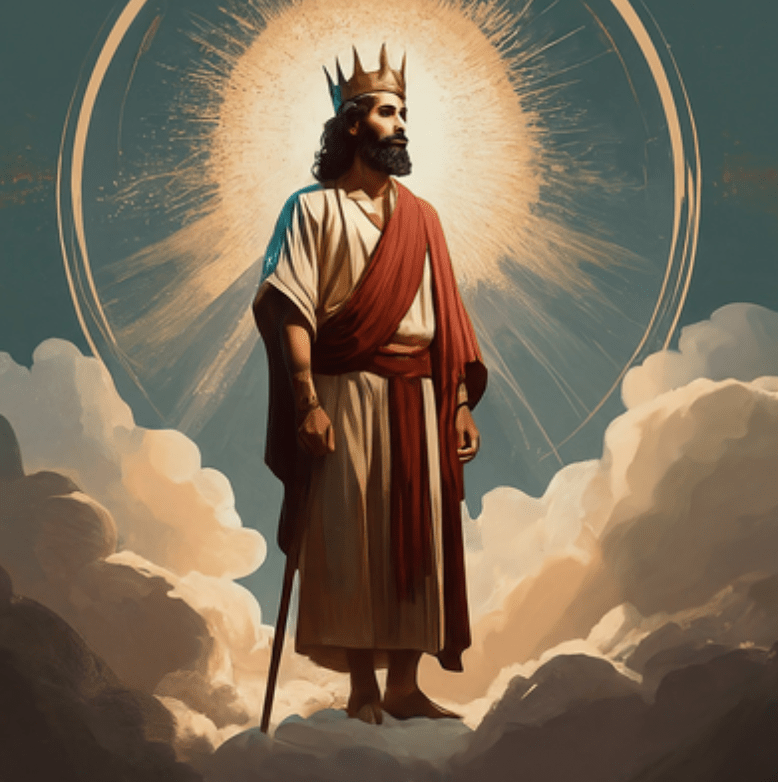
Son of Man: From Humility to Glory
The phrase “Son of Man” is a profound biblical title that appears throughout the Old Testament, carrying layered meanings depending on the context. At times, it highlights human frailty and mortality. Yet in a pivotal Messianic vision, particularly in Daniel 7, it emerges as a title of divine authority. The vision describes one like a Son of Man coming with the clouds of heaven and receiving everlasting dominion.
This vision finds its fulfillment in Jesus Christ, who frequently used the title for Himself. Far from being merely a reference to His humanity, the term points to His unique identity as the visible manifestation of the one true God.
The General Use of “Son of Man” in the Old Testament
In many Old Testament passages, “Son of Man” simply refers to a human being, highlighting mortality and weakness compared to God’s supremacy. Numbers 23:19 states that God is not a “son of man” that He should repent, while Psalm 8:4 asks what a “son of man” is that God should visit him.
These verses emphasize human frailty in contrast to God’s eternal nature. By taking on human nature, Jesus embraced this weakness. Paul echoes this in Philippians 2:6–8, noting that Christ took the form of a servant and was found in appearance as a man. The Old Testament’s portrayal of the Son of Man as mortal foreshadows God manifesting Himself in flesh to redeem humanity [4].
The “Son of Man” in Ezekiel: A Prophet’s Identity
The Book of Ezekiel uses the title over 90 times as God’s way of addressing the prophet. This usage reinforces Ezekiel’s humanity in contrast to the overwhelming divine power he witnessed. Ezekiel is often addressed as “son of man” while standing in the presence of the Kavod, the radiant Glory of the LORD.
While Ezekiel is the “son of man” who sees the glory, Jesus is the “Son of Man” who is the glory. This preparation in Ezekiel sets the stage for Christ, who would become the ultimate divine messenger and the literal embodiment of the glory Ezekiel could only behold from a distance [5].
The Messianic Prophecy: Daniel 7:13–14
The most profound use of the title appears in Daniel 7:13–14, where the phrase shifts from human frailty to divine authority. Daniel depicts a heavenly figure coming with the clouds of heaven to receive a kingdom that all nations should serve.
Unlike earlier references, this passage associates the Son of Man with worship reserved for God alone. In Jewish tradition, this was understood as the Messianic King. Jesus directly applied this title to Himself, revealing that He is the visible manifestation of the one true God, fulfilling Daniel’s vision through His exaltation and heavenly enthronement [2, 7].
Jesus: The Prophesied Son of Man
When Jesus referred to Himself as the Son of Man, He was identifying with humanity while simultaneously claiming the divine authority seen in Daniel. His use of the title reaches its climax in Matthew 26:64, where He declares that the high priest will see the Son of Man sitting at the right hand of Power and coming on the clouds of heaven.
The Jewish leaders immediately recognized this as a reference to Daniel 7. They understood that Jesus was not merely claiming to be a prophet but was claiming the unique identity of the divine Judge. This declaration led to the charge of blasphemy because Jesus placed Himself within the unique divine identity of YHWH [1, 8].
The Son of Man Revealed in Christ
The Old Testament “Son of Man” starts as a term of human frailty but ultimately reveals the one true God, made visible in Jesus Christ. Jesus embraced mortality to demonstrate God’s profound humility in taking on human form. The same God who reigns eternally chose to suffer, serve, and redeem through the incarnation.
Understanding the Old Testament roots of this title clarifies that the “Son of Man” whom Daniel saw in his vision is the same Jesus who reigns today. He is the King who will return to establish His eternal kingdom, just as He promised.
References
- Wright, N. T. The Resurrection of the Son of God.
- Bauckham, Richard. Jesus and the God of Israel.
- Boyarin, Daniel. The Jewish Gospels.
- Dunn, James D. G. Did the First Christians Worship Jesus?
- Bernard, David K. The Oneness of God.
- Block, Daniel I. The Book of Ezekiel.
- Hurtado, Larry. Lord Jesus Christ.
- Sommer, Benjamin D. The Bodies of God.
 Spread the Spirit
Share your thoughts!